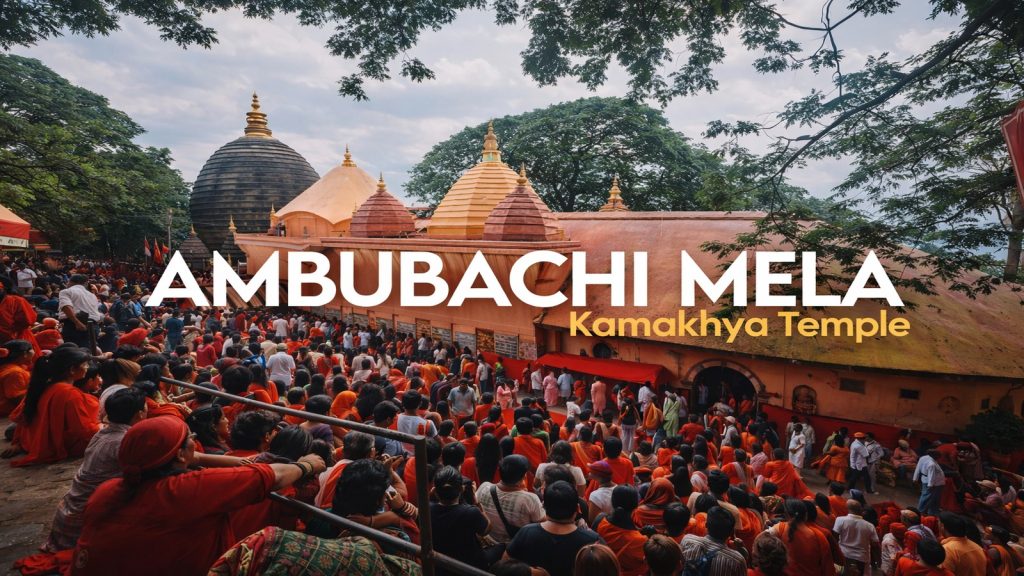
Ambubachi Mela History
The history of Ambubachi Mela is deeply rooted in India’s Shakti traditions. In fact, the festival’s origin is closely connected with Kamakhya Temple, one of the most revered Shakti Peethas.
Ancient mythology narrates the story of Goddess Sati, daughter of King Daksha and consort of Lord Shiva. During a grand ritual organized by her father, Sati witnessed Lord Shiva being insulted. Unable to bear the humiliation, she sacrificed her life in the sacred fire.
Overcome with grief, Lord Shiva lifted Sati’s body and wandered across the universe. His sorrowful cosmic dance carried such intensity that it threatened the balance of creation itself.
To restore harmony, Lord Vishnu intervened. Using his Sudarshan Chakra, he separated Sati’s body into sacred fragments. These divine parts fell across different regions of the Indian subcontinent. Over time, these locations came to be known as Shakti Peethas — sacred centers of feminine energy.
Among them, Nilachal Hill in present‑day Guwahati holds special importance. Devotional traditions believe that the womb essence of Goddess Sati manifested here, transforming the site into a powerful center of fertility and creative energy.
You may explore the traditional Shakti Peetha list here: https://en.wikipedia.org/wiki/Shakta_pithas
Ambubachi Mela emerges from this sacred belief system. It marks the period when Goddess Kamakhya is believed to undergo her annual fertility cycle. Rather than viewing this phase as impure, devotees revere it as the very source of life.
For centuries, tantrics, mystics, and spiritual seekers have gathered here during this spiritually charged time. They perform meditation, mantra sadhanas, and esoteric rituals, believing spiritual energies peak during these days.
Why Ambubachi Mela is Famous
Ambubachi Mela is globally known not just as a festival but as a rare spiritual phenomenon.
Festival of Feminine Power
The festival honors menstruation as sacred. It challenges social stigma and celebrates divine femininity.
International Tantric Meet
Aghoris, naga sadhus, ascetics, and tantriks gather from across India and abroad to perform intense spiritual practices.
Special Temple Closure Ritual
The inner sanctum of the temple remains closed for three days, symbolizing the Goddess’s fertility phase.
Sacred Prasad Distribution
When the temple reopens, devotees receive:
- Angodak (Holy Water)
- Angabastra (Sacred Red Cloth)
These are preserved as protective blessings.
Ambubachi Mela Dates & Duration
The mela takes place every year in June during the monsoon season, aligning with the Assamese month of Ahaar.
Festival Duration: 4 Days
- Day 1–3: Temple remains closed
- Day 4: Temple reopens after ceremonial rituals
Rituals Performed During Ambubachi Mela
Temple Closure
Priests ceremonially close the sanctum after preparatory rituals. Agricultural activities also pause, symbolizing respect for Earth’s fertility cycle.
Tantric Sadhanas
Practitioners perform sacred disciplines such as:
- Meditation
- Mantra Siddhi
- Yajnas
- Occult practices
Holy Purification Ritual
On the fourth day, purification ceremonies prepare the temple for reopening.
Prasad Distribution
Devotees receive:
- Angodak – Holy Water
- Angabastra – Sacred Cloth
Ambubachi Mela Visitor Guide
Proper planning enhances the pilgrimage experience.
Location
Kamakhya Temple, Nilachal Hill, Guwahati, Assam
How to Reach Kamakhya Temple
- Air: Lokpriya Gopinath Bordoloi International Airport
- Rail: Guwahati Railway Station (8 km away)
- Road: Buses, taxis, and private vehicles available
Refer to our How to Reach Kamakhya Temple guide (Internal Link) for full details.
Accommodation During Ambubachi Mela
Due to the massive influx of devotees, accommodations fill quickly. Options include:
- Dharamshalas
- Budget hotels
- Ashrams
- Government camps
- Temporary tent facilities
Advance booking is highly recommended.
Travel Tips for Ambubachi Mela
- Arrive early to avoid long queues
- Carry valid ID proof
- Wear comfortable clothing
- Stay hydrated
- Follow temple guidelines
- Avoid unauthorized agents
Cultural & Economic Impact
Tourism Growth
The mela significantly boosts Assam’s tourism economy.
Cultural Preservation
Ancient tantric traditions gain renewed global attention.
Employment Generation
Seasonal employment rises in transport and hospitality sectors.
Spiritual Significance
Ambubachi Mela symbolizes profound cosmic principles:
- Fertility of Mother Earth
- Creative life force
- Divine feminine consciousness
- Renewal of natural cycles
It teaches respect for biological processes as sacred expressions of life.
FAQs – Ambubachi Mela History
When is Ambubachi Mela observed?
Every year in June.
Why does Kamakhya Temple remain closed during the mela?
It signifies the Goddess’s annual fertility cycle.
What prasad is offered?
Angodak and Angabastra.
Is the mela safe for visitors?
Yes, with proper precautions due to heavy crowds.
How long does the festival continue?
Four days.
Call To Action (CTA)
Plan your visit to Kamakhya Temple during Ambubachi Mela to witness one of the world’s most spiritually unique gatherings.
Read our detailed Ambubachi Mela Travel Guide (Internal Link) before planning your trip.
Book accommodations early for a hassle‑free pilgrimage.
Conclusion
Ambubachi Mela is experienced by devotees as a living celebration of life’s origin — where fertility, creation, and feminine cosmic power are deeply felt realities. Rooted in sacred traditions and tantric philosophy, the festival offers more than ritual — it offers spiritual awakening.
Over time, what began in legend has evolved into a living tradition that continues to draw seekers from across the world.
To witness Ambubachi Mela at Kamakhya Temple is to feel the silent rhythm of creation that devotees believe flows through the sacred land of Nilachal Hill.
अंबुबाची मेला इतिहास
अंबुबाची मेले का इतिहास भारत की शक्तिपरंपरा से गहराई से जुड़ा हुआ है। यह पर्व कामाख्या मंदिर से उत्पन्न हुआ माना जाता है, जो भारत के सबसे महत्वपूर्ण शक्तिपीठों में से एक है।
प्राचीन पौराणिक कथा के अनुसार, देवी सती राजा दक्ष की पुत्री और भगवान शिव की अर्धांगिनी थीं। एक भव्य यज्ञ का आयोजन राजा दक्ष ने किया, जिसमें उन्होंने भगवान शिव का अपमान किया। यह अपमान देवी सती सहन न कर सकीं और उन्होंने यज्ञ अग्नि में स्वयं को समर्पित कर दिया।
भगवान शिव शोक से व्याकुल हो उठे। वे सती के पार्थिव शरीर को लेकर संपूर्ण ब्रह्मांड में विचरण करने लगे। उनका करुण तांडव इतना प्रचंड था कि सृष्टि का संतुलन डगमगाने लगा।
सृष्टि में संतुलन पुनः स्थापित करने हेतु भगवान विष्णु ने हस्तक्षेप किया। उन्होंने अपने सुदर्शन चक्र से देवी सती के शरीर के अनेक खंड कर दिए। ये दिव्य अंग भारतीय उपमहाद्वीप के विभिन्न स्थानों पर गिरे। समय के साथ ये स्थल शक्तिपीठ कहलाए — अर्थात् दिव्य स्त्री शक्ति के पवित्र केंद्र।
इनमें वर्तमान गुवाहाटी स्थित नीलांचल पहाड़ी का विशेष महत्व है। श्रद्धालु मानते हैं कि यहाँ देवी सती का योनितत्व प्रकट हुआ, जिससे यह स्थान सृजन और प्रजनन शक्ति का अत्यंत शक्तिशाली केंद्र बन गया।
आप शक्तिपीठों की पारंपरिक सूची यहाँ देख सकते हैं:
https://en.wikipedia.org/wiki/Shakti_Peetha (Outbound Link)
अंबुबाची मेला इसी आस्था से उत्पन्न हुआ है। यह वह समय माना जाता है जब देवी कामाख्या अपनी वार्षिक प्रजनन चक्र से गुजरती हैं। जहाँ समाज में इस अवस्था को अशुद्ध माना जाता है, वहीं यहाँ इसे जीवन का मूल स्रोत मानकर पूजित किया जाता है।
सदियों से तांत्रिक, साधक, और आध्यात्मिक जिज्ञासु इस आध्यात्मिक ऊर्जा से परिपूर्ण काल में यहाँ एकत्र होते आए हैं। वे ध्यान, मंत्रजाप और गूढ़ साधनाएँ करते हैं, क्योंकि मान्यता है कि इन दिनों आध्यात्मिक शक्तियाँ सर्वाधिक प्रबल होती हैं।
अंबुबाची मेला क्यों प्रसिद्ध है
अंबुबाची मेला केवल एक उत्सव नहीं, बल्कि विश्वप्रसिद्ध आध्यात्मिक घटना के रूप में जाना जाता है।
स्त्री शक्ति का उत्सव
यह पर्व मासिक धर्म को पवित्र मानता है। यह सामाजिक वर्जनाओं को तोड़ते हुए दिव्य स्त्रीत्व का सम्मान करता है।
अंतरराष्ट्रीय तांत्रिक समागम
अघोरी, नागा साधु, सन्यासी और तांत्रिक भारत सहित विश्वभर से यहाँ साधना हेतु आते हैं।
विशेष मंदिर बंद होने की परंपरा
मंदिर का गर्भगृह तीन दिनों तक बंद रहता है, जो देवी के प्रजनन काल का प्रतीक है।
पवित्र प्रसाद वितरण
मंदिर पुनः खुलने पर श्रद्धालुओं को प्राप्त होता है:
- अंगोदक (पवित्र जल)
- अंगवस्त्र (लाल पवित्र वस्त्र)
इन्हें रक्षात्मक आशीर्वाद के रूप में सुरक्षित रखा जाता है।
अंबुबाची मेला तिथि एवं अवधि
यह मेला प्रतिवर्ष जून माह में, मानसून ऋतु के दौरान, असमिया महीने ‘आहार’ में आयोजित होता है।
मेला अवधि: 4 दिन
- दिन 1–3: मंदिर बंद रहता है
- दिन 4: धार्मिक अनुष्ठानों के बाद मंदिर पुनः खुलता है
अंबुबाची मेले के दौरान किए जाने वाले अनुष्ठान
मंदिर बंद अनुष्ठान
प्रारंभिक पूजन के बाद पुजारी गर्भगृह को बंद कर देते हैं। इस अवधि में कृषि कार्य भी रोक दिए जाते हैं, जो पृथ्वी की उर्वरता के प्रति सम्मान का प्रतीक है।
तांत्रिक साधनाएँ
साधक निम्न साधनाएँ करते हैं:
- ध्यान
- मंत्र सिद्धि
- यज्ञ
- गूढ़ तांत्रिक क्रियाएँ
पवित्रीकरण अनुष्ठान
चौथे दिन मंदिर को शुद्धिकरण विधि से पुनः दर्शन हेतु तैयार किया जाता है।
प्रसाद वितरण
श्रद्धालुओं को प्राप्त होता है:
- अंगोदक – पवित्र जल
- अंगवस्त्र – पवित्र वस्त्र
अंबुबाची मेला विज़िटर गाइड
पूर्व योजना यात्रा अनुभव को सुगम बनाती है।
स्थान
कामाख्या मंदिर, नीलांचल पहाड़ी, गुवाहाटी, असम
कैसे पहुँचें
वायु मार्ग: लोकप्रिया गोपीनाथ बोरदोलोई अंतरराष्ट्रीय हवाई अड्डा
रेल मार्ग: गुवाहाटी रेलवे स्टेशन (लगभग 8 किमी)
सड़क मार्ग: बस, टैक्सी एवं निजी वाहन उपलब्ध
विस्तृत जानकारी हेतु हमारा How to Reach Kamakhya Temple गाइड (Internal Link) देखें।
अंबुबाची मेले के दौरान आवास व्यवस्था
भारी भीड़ के कारण आवास शीघ्र भर जाते हैं। उपलब्ध विकल्प:
- धर्मशालाएँ
- बजट होटल
- आश्रम
- सरकारी कैंप
- अस्थायी टेंट सुविधा
अग्रिम बुकिंग अत्यंत आवश्यक है।
अंबुबाची मेला यात्रा सुझाव
- लंबी कतारों से बचने हेतु शीघ्र पहुँचें
- वैध पहचान पत्र साथ रखें
- आरामदायक वस्त्र पहनें
- पर्याप्त जल पिएँ
- मंदिर प्रशासन के नियमों का पालन करें
- अनधिकृत दलालों से सावधान रहें
सांस्कृतिक एवं आर्थिक प्रभाव
पर्यटन वृद्धि
यह मेला असम के पर्यटन उद्योग को अत्यधिक बढ़ावा देता है।
संस्कृति संरक्षण
प्राचीन तांत्रिक परंपराओं को वैश्विक पहचान मिलती है।
रोज़गार सृजन
परिवहन और आतिथ्य क्षेत्र में अस्थायी रोजगार बढ़ते हैं।
आध्यात्मिक महत्व
अंबुबाची मेला निम्न ब्रह्मांडीय सिद्धांतों का प्रतीक है:
- धरती माता की उर्वरता
- सृजनात्मक जीवन शक्ति
- दिव्य स्त्री चेतना
- प्राकृतिक चक्रों का पुनर्जागरण
यह जैविक प्रक्रियाओं को जीवन के पवित्र रूप में स्वीकारना सिखाता है।
FAQs – अंबुबाची मेला इतिहास
प्रश्न: अंबुबाची मेला कब मनाया जाता है?
उत्तर: प्रत्येक वर्ष जून माह में।
प्रश्न: मेले के दौरान कामाख्या मंदिर क्यों बंद रहता है?
उत्तर: यह देवी के वार्षिक प्रजनन चक्र का प्रतीक है।
प्रश्न: कौन-सा प्रसाद दिया जाता है?
उत्तर: अंगोदक और अंगवस्त्र।
प्रश्न: क्या पर्यटकों के लिए मेला सुरक्षित है?
उत्तर: हाँ, उचित सावधानियों के साथ।
प्रश्न: मेला कितने दिन चलता है?
उत्तर: चार दिन।
Call To Action (CTA)
अंबुबाची मेले के दौरान कामाख्या मंदिर की यात्रा की योजना बनाइए और विश्व के सबसे अनोखे आध्यात्मिक आयोजनों में से एक का अनुभव कीजिए।
यात्रा से पहले हमारा विस्तृत Ambubachi Mela Travel Guide (Internal Link) अवश्य पढ़ें।
सुगम तीर्थयात्रा हेतु आवास अग्रिम बुक करें।
निष्कर्ष
अंबुबाची मेला जीवन की उत्पत्ति का जीवंत उत्सव है। यह उर्वरता, सृजन और दिव्य स्त्री शक्ति को एक सूत्र में जोड़ता है। पौराणिक परंपराओं और तांत्रिक दर्शन में निहित यह पर्व केवल अनुष्ठान नहीं, बल्कि आध्यात्मिक जागरण का अनुभव प्रदान करता है।
जो कथा कभी लोकविश्वास थी, वह आज जीवित परंपरा बनकर विश्वभर से साधकों को आकर्षित कर रही है।
कामाख्या मंदिर में अंबुबाची मेले का अनुभव करना सृष्टि की उस मौन लय को महसूस करना है, जिसे श्रद्धालु नीलांचल पर्वत की पवित्र भूमि में स्पंदित मानते हैं।