Kamakhya Devi is revered as an incarnation of Goddess Shakti — the supreme embodiment of feminine cosmic energy. She symbolizes creation, fertility, desire, and divine power. The sacred shrine dedicated to Kamakhya Devi represents the origin of life and the cosmic force of the universe.
Unlike most Hindu temples where idols are worshipped, the Kamakhya Temple enshrines a natural rock fissure symbolizing the yoni — the generative womb of the Goddess. This sacred form represents fertility, regeneration, and the eternal cycle of creation.
She is associated with:
Feminine Power (Shakti)
Fertility and Motherhood
Desire and Creation
Kamakhya Devi Temple – Location & Importance
The holy temple of Kamakhya Devi is situated atop Nilachal Hill in Guwahati, Assam. Surrounded by lush greenery and overlooking the Brahmaputra River, the temple radiates mystical and spiritual energy.
Moreover, it is considered one of the most powerful Shakti Peethas in India, attracting millions of devotees annually.
Mythological Story of Kamakhya Devi
The origin of Kamakhya Devi is deeply rooted in the legend of Goddess Sati and Lord Shiva.
According to Hindu mythology, Sati sacrificed herself after her father, King Daksha, insulted Lord Shiva. Overcome with grief, Shiva performed the cosmic dance of destruction — Tandava — carrying her body across the universe.
To restore cosmic balance, Lord Vishnu used his Sudarshan Chakra to divide Sati’s body into pieces. These sacred parts fell at different locations, forming the Shakti Peethas.
It is believed that Sati’s womb and yoni fell on Nilachal Hill, making it the eternal seat of fertility and creation — worshipped today as Kamakhya Devi.
Spiritual Significance of Kamakhya Devi Shakti Peeth
The shrine of Kamakhya Devi is considered a powerful center of divine feminine energy and Tantra sadhana.
Devotees believe worshipping here grants:
Spiritual awakening
Fertility blessings
Marriage harmony
Physical and emotional healing
Additionally, Tantric practitioners regard Kamakhya Devi Temple as their holiest pilgrimage destination.
Ambubachi Mela – Festival of Kamakhya Devi
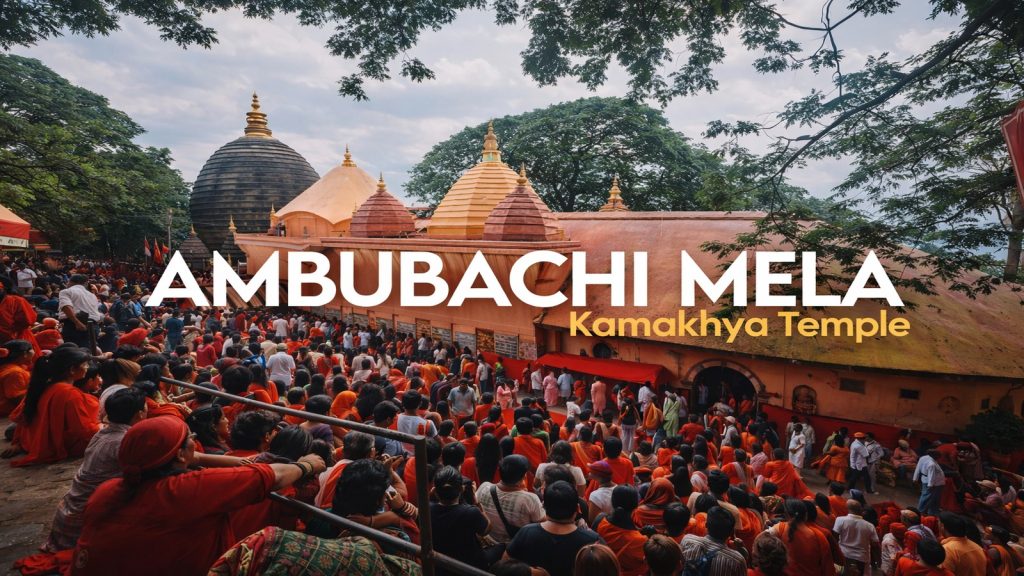
One of the most mystical festivals dedicated to Kamakhya Devi is the Ambubachi Mela.
What Happens During Ambubachi Mela?
Celebrated every year in June
Marks the menstruation cycle of the Goddess
Temple remains closed for three days
Reopens with grand rituals and celebrations
Interestingly, this festival symbolizes fertility and the creative power of nature.
Ritual Practices & Offerings at Kamakhya Devi Temple
Ritual traditions at the shrine are deeply rooted in Tantric philosophy.
Major practices include:
Animal sacrifices (traditional ritual)
Fertility prayers
Red cloth and sindoor offerings
Night sadhanas by Aghoris and Tantrics
Therefore, the temple holds immense importance in Tantric spirituality.
Temple Architecture of Kamakhya Devi
The temple architecture reflects a blend of classical and regional styles:
Nagara style (North Indian influence)
Indigenous Assamese design
Dome-shaped shikhara tower
The sanctum lies within a cave-like chamber housing the sacred yoni stone, continuously nourished by an underground spring.
Kamakhya Devi is not merely a goddess but the embodiment of creation, desire, and feminine cosmic power. Her temple stands as a sacred gateway where mythology, Tantra, and spirituality converge.
From the mystical Ambubachi Mela to the divine energy of the Shakti Peeth, Kamakhya continues to attract pilgrims seeking blessings and enlightenment.
Visiting Kamakhya Devi — physically or spiritually — leaves a profound and transformative impact on every devotee’s soul.
Story of Kamakhya Temple
The Story of Kamakhya Temple is one of the most mystical and spiritually significant narratives in India. Situated atop the Nilachal Hills in Assam, this ancient shrine is not merely a place of worship; rather, it represents feminine cosmic power and fertility.
Every year, millions of devotees, spiritual seekers, and researchers visit the temple to experience its divine energy. Unlike other temples, Kamakhya does not house a traditional idol. Instead, it worships the very essence of life, which makes it one of the most unique Shakti Peethas in the world.
Mythological Origin – Story of Kamakhya Temple
According to Hindu mythology, the Story of Kamakhya Temple begins with Goddess Sati and Lord Shiva.
Sati, the daughter of King Daksha, married Lord Shiva despite her father’s strong disapproval. Later, Daksha organized a grand yajna but intentionally refused to invite Shiva. Nevertheless, Sati attended the ceremony.
However, when Daksha insulted Shiva publicly, Sati could not bear the humiliation and immolated herself in the sacrificial fire.
When Shiva learned about her death, he performed the destructive Tandava. Consequently, to save the universe, Lord Vishnu used his Sudarshan Chakra to divide Sati’s body into pieces.
These sacred parts fell across the Indian subcontinent, forming the 51 Shakti Peethas. Devotees believe that Sati’s womb and yoni fell on the Nilachal Hills, where the Kamakhya Temple stands today. Therefore, the temple symbolizes fertility, creation, and feminine power.
Why There Is No Idol – Story of Kamakhya Temple
One of the most distinctive aspects in the Story of Kamakhya Temple is its mode of worship.
There is no physical idol of the goddess. Instead, devotees worship a naturally formed rock cleft shaped like a yoni inside a cave-like sanctum. Moreover, an underground spring keeps the sacred rock moist throughout the year.
Symbolic Meaning
• Yoni → Source of life • Water → Creative energy • Cave → Cosmic womb
Thus, Kamakhya becomes a shrine where nature itself is revered as the goddess.
Ambubachi Mela – Festival in the Story of Kamakhya Temple
Ambubachi Mela is one of the most important festivals linked to the Story of Kamakhya Temple. It takes place annually in June.
During this period, devotees believe that Goddess Kamakhya undergoes her menstrual cycle.
Festival Rituals
• Temple remains closed for three days • No daily worship rituals occur • Pilgrimage activity pauses locally • Devotees receive sacred red cloth after reopening
Spiritual Significance
Ambubachi celebrates:
• Feminine biology as sacred • Fertility as divine power • Nature’s reproductive cycle
Therefore, Kamakhya is among the few temples where menstruation is spiritually sanctified.
Tantric Importance in the Story of Kamakhya Temple
Kamakhya Temple is globally recognized as a major center of Tantra Sadhana.
Tantriks, Aghoris, and mystics frequently visit to perform advanced spiritual practices. Furthermore, the temple’s intense Shakti energy makes it ideal for mantra siddhi and meditation.
Why Tantra Is Practiced Here
• Strong Shakti energy concentration • Symbolic union of Shiva and Shakti • Ideal environment for spiritual attainment • Accelerated path to enlightenment
Connection With the Ten Mahavidyas
Another vital dimension in the Story of Kamakhya Temple is its association with the Ten Mahavidyas.
Forms such as Kali, Tara, Tripura Sundari, and Bhairavi have dedicated shrines within the temple complex. Consequently, the site forms a complete Shakti spiritual circuit for tantric worshippers.
Historical Reconstruction of Kamakhya Temple
Historical records suggest that invaders destroyed the original structure during medieval times.
However, King Naranarayana of the Koch dynasty rediscovered and rebuilt the temple in the 16th century.
Architectural Highlights
• Beehive-shaped dome • Intricate sculptural carvings • Blend of Assamese and North Indian styles
The architecture symbolically represents fertility and abundance.
Spiritual Beliefs and Devotee Faith
Devotees believe that Goddess Kamakhya grants:
• Fertility blessings • Marriage harmony • Protection from negative energies • Spiritual awakening
Therefore, child-seeking couples and spiritual aspirants frequently perform rituals here.
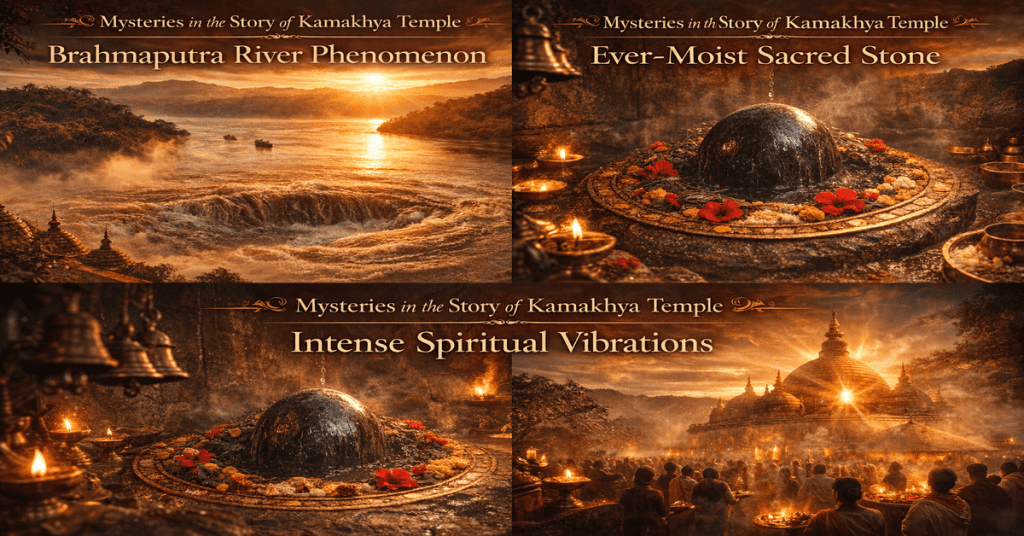
Mysteries in the Story of Kamakhya Temple
Several unexplained phenomena enhance the temple’s mystique.
Ever-Moist Sacred Stone
The yoni rock remains naturally wet without a visible water source.
Brahmaputra River Phenomenon
Interestingly, nearby waters appear reddish during Ambubachi.
Intense Spiritual Vibrations
Many visitors report powerful energy within the sanctum.
Best Time to Visit Kamakhya Temple
• October to March → Pleasant weather • June → Ambubachi Festival
Pilgrims often combine this journey with other Northeast temple visits.
The Story of Kamakhya Temple is not merely mythology; rather, it is a celebration of creation, feminine divinity, and cosmic energy. From the legend of Goddess Sati to the sacred Ambubachi festival, every tradition reflects the power of Shakti.
Ultimately, Kamakhya stands as a spiritual beacon where tantra, faith, biology, and mysticism merge into one divine experience.
कामाख्या मंदिर की कथा
कामाख्या मंदिर की कथा भारत की सबसे रहस्यमय और आध्यात्मिक रूप से महत्वपूर्ण कथाओं में से एक है। असम के नीलाचल पर्वत पर स्थित यह प्राचीन शक्तिपीठ केवल पूजा का स्थान नहीं है, बल्कि यह स्त्री ब्रह्मांडीय शक्ति और सृजनशीलता का प्रतीक है।
हर वर्ष लाखों भक्त, साधक और शोधकर्ता इस मंदिर की दिव्य ऊर्जा का अनुभव करने आते हैं। अन्य मंदिरों के विपरीत, कामाख्या मंदिर में पारंपरिक मूर्ति नहीं है। यहाँ जीवन के मूल तत्व की पूजा की जाती है, जो इसे विश्व के सबसे अद्वितीय शक्तिपीठों में स्थान दिलाती है।
पौराणिक उत्पत्ति – कामाख्या मंदिर की कथा
हिंदू पौराणिक कथाओं के अनुसार, कामाख्या मंदिर की कथा देवी सती और भगवान शिव से प्रारंभ होती है।
सती, राजा दक्ष की पुत्री थीं, जिन्होंने पिता की असहमति के बावजूद भगवान शिव से विवाह किया। बाद में दक्ष ने एक भव्य यज्ञ का आयोजन किया, परंतु उन्होंने जानबूझकर शिव को आमंत्रित नहीं किया। फिर भी सती उस यज्ञ में पहुँचीं।
जब दक्ष ने शिव का सार्वजनिक अपमान किया, तो सती यह अपमान सहन न कर सकीं और यज्ञ अग्नि में स्वयं को समर्पित कर दिया।
सती की मृत्यु का समाचार सुनकर शिव ने विनाशकारी तांडव किया। परिणामस्वरूप, सृष्टि की रक्षा हेतु भगवान विष्णु ने अपने सुदर्शन चक्र से सती के शरीर को खंडों में विभाजित कर दिया।
ये अंग पृथ्वी के विभिन्न स्थानों पर गिरे और 51 शक्तिपीठों का निर्माण हुआ। मान्यता है कि सती का गर्भ और योनि नीलाचल पर्वत पर गिरी, जहाँ आज कामाख्या मंदिर स्थित है। इसलिए यह मंदिर सृजन, प्रजनन और स्त्री शक्ति का प्रतीक माना जाता है।
मूर्ति क्यों नहीं है – कामाख्या मंदिर की कथा
कामाख्या मंदिर की कथा का एक अनूठा पक्ष इसकी पूजा पद्धति है।
यहाँ देवी की कोई मूर्ति नहीं है। इसके स्थान पर भक्त एक प्राकृतिक शिला-खंड की पूजा करते हैं, जो योनि के आकार का है और गुफानुमा गर्भगृह में स्थित है। साथ ही, एक भूमिगत जलधारा इस पवित्र शिला को वर्षभर आर्द्र बनाए रखती है।
प्रतीकात्मक अर्थ
• योनि → जीवन का स्रोत • जल → सृजन ऊर्जा • गुफा → ब्रह्मांडीय गर्भ
इस प्रकार कामाख्या वह धाम है जहाँ स्वयं प्रकृति को देवी रूप में पूजा जाता है।
अंबुबाची मेला – कामाख्या मंदिर की कथा का पर्व
अंबुबाची मेला कामाख्या मंदिर से जुड़ा सबसे महत्वपूर्ण उत्सव है, जो प्रतिवर्ष जून में मनाया जाता है।
इस अवधि में मान्यता है कि देवी कामाख्या ऋतुमती होती हैं।
उत्सव अनुष्ठान
• मंदिर तीन दिन बंद रहता है • नियमित पूजा नहीं होती • स्थानीय धार्मिक गतिविधियाँ रुकती हैं • पुनः द्वार खुलने पर भक्तों को लाल वस्त्र प्रसाद मिलता है
आध्यात्मिक महत्व
अंबुबाची उत्सव दर्शाता है:
• स्त्री जैविक प्रक्रिया की पवित्रता • प्रजनन को दिव्य शक्ति मानना • प्रकृति के सृजन चक्र का सम्मान
इस प्रकार कामाख्या उन दुर्लभ मंदिरों में है जहाँ मासिक धर्म को पवित्र माना जाता है।
तांत्रिक महत्व – कामाख्या मंदिर की कथा
कामाख्या मंदिर तंत्र साधना का वैश्विक केंद्र माना जाता है।
तांत्रिक, अघोरी और साधक यहाँ उच्च स्तरीय साधनाएँ करने आते हैं। साथ ही, यहाँ की शक्तिशाली ऊर्जा मंत्र सिद्धि और ध्यान के लिए अत्यंत उपयुक्त मानी जाती है।
यहाँ तंत्र साधना क्यों होती है
• शक्तिशाली शक्ति ऊर्जा • शिव-शक्ति का प्रतीकात्मक मिलन • सिद्धि प्राप्ति का अनुकूल वातावरण • शीघ्र आध्यात्मिक उन्नति
दस महाविद्याओं से संबंध
कामाख्या मंदिर की कथा का एक अन्य महत्वपूर्ण पक्ष इसका दस महाविद्याओं से संबंध है।
काली, तारा, त्रिपुरा सुंदरी और भैरवी सहित कई रूपों के मंदिर परिसर में स्थित हैं। इस प्रकार यह स्थान तांत्रिक साधकों के लिए पूर्ण शक्ति परिक्रमा क्षेत्र बनता है।
ऐतिहासिक पुनर्निर्माण
इतिहास के अनुसार, मध्यकालीन आक्रमणों में मूल मंदिर नष्ट हो गया था।
बाद में कोच वंश के राजा नरनारायण ने 16वीं शताब्दी में इसका पुनर्निर्माण कराया।
वास्तुकला विशेषताएँ
• मधुमक्खी छत्ता आकार का गुंबद • सूक्ष्म शिल्प नक्काशी • असमिया और उत्तर भारतीय शैली का मिश्रण
मंदिर की संरचना उर्वरता और समृद्धि का प्रतीक है।
आस्था और भक्त विश्वास
भक्तों के अनुसार, माँ कामाख्या प्रदान करती हैं:
• संतान सुख • वैवाहिक सौहार्द • नकारात्मक शक्तियों से रक्षा • आध्यात्मिक जागरण
इसी कारण दंपति और साधक विशेष पूजा करते हैं।
रहस्य – कामाख्या मंदिर की कथा
मंदिर से जुड़े अनेक रहस्य इसकी दिव्यता बढ़ाते हैं।
सदैव आर्द्र पवित्र शिला
योनि शिला बिना स्रोत के भी नम रहती है।
ब्रह्मपुत्र नदी घटना
अंबुबाची के दौरान जल लालिमा लिए दिखता है।
तीव्र आध्यात्मिक कंपन
भक्त गर्भगृह में शक्तिशाली ऊर्जा अनुभव करते हैं।
यात्रा का सर्वोत्तम समय
• अक्टूबर – मार्च → सुहावना मौसम • जून → अंबुबाची मेला
निष्कर्ष – कामाख्या मंदिर की कथा
कामाख्या मंदिर की कथा केवल पौराणिक आख्यान नहीं, बल्कि सृजन, स्त्री शक्ति और ब्रह्मांडीय ऊर्जा का उत्सव है। सती की कथा से लेकर अंबुबाची पर्व तक, हर परंपरा शक्ति की महिमा को दर्शाती है।
अंततः, कामाख्या एक ऐसा आध्यात्मिक केंद्र है जहाँ तंत्र, आस्था, प्रकृति और रहस्य एक दिव्य अनुभव में एकीकृत हो जाते हैं।
Who Built Kamakhya Temple
If you are searching “Who Built Kamakhya Temple,” you are not alone. This sacred shrine, located on Nilachal Hill in Guwahati, Assam, is one of India’s most mysterious Shakti Peethas. Every year, millions of devotees visit the temple to seek divine blessings.
However, many people still wonder — who actually built Kamakhya Temple?
To answer this, we must explore mythology, early construction, destruction, and royal reconstruction.
Mythological Origin Before Kamakhya Temple Was Built
Before understanding who built Kamakhya Temple, it is essential to know its mythological roots.
According to Hindu scriptures, Sati — the consort of Lord Shiva — sacrificed herself during King Daksha’s yajna. As a result, Lord Shiva wandered the universe carrying her body.
Eventually, Lord Vishnu used the Sudarshan Chakra to dismember the corpse. Consequently, Sati’s yoni fell on Nilachal Hill, making it one of the 51 Shakti Peethas.
Because of this:
Worship began naturally
No idol was installed
Tantra practices developed
Thus, the site was sacred even before the temple was built.
Early History: First Structure of Kamakhya Temple
When discussing who built Kamakhya Temple, historians trace its earliest structure to the Mlechchha dynasty of ancient Assam.
Although archaeological proof is scarce, records indicate:
A modest shrine existed
Local materials were used
Over time, the temple gained regional prominence.
Destruction: A Turning Point in Kamakhya Temple History
To fully understand who built Kamakhya Temple, we must examine its destruction.
During the 16th century, Kalapahar — a general of the Bengal Sultanate — attacked the region. Subsequently, the original temple was demolished.
As a result:
The shrine fell into ruin
Pilgrimage activities declined
This destruction created the need for reconstruction.
Reconstruction: Who Built Kamakhya Temple in Present Form?
Here lies the definitive historical answer to who built Kamakhya Temple.
In 1565 CE, King Naranarayana of the Koch dynasty rebuilt the temple. Additionally, his brother General Chilarai assisted in the reconstruction.
Their goals included:
Reviving Shakti worship
Restoring spiritual importance
Rebuilding Assamese heritage
➡️ Therefore, the present Kamakhya Temple was rebuilt by King Naranarayana.
Architectural Style After Kamakhya Temple Reconstruction
After learning who built Kamakhya Temple, it is equally important to examine its architecture.
The temple follows Nilachal architectural style, which combines:
Assamese indigenous design
Nagara elements
Tantric symbolism
Structural Highlights
Beehive-shaped dome
Sculpted panels
Mandapas
Underground sanctum
Notably, devotees worship a natural rock fissure instead of an idol.
Religious Importance of Kamakhya Temple
Beyond knowing who built Kamakhya Temple, devotees value its spiritual power.
It is regarded as:
A major Shakti Peetha
A Tantra worship center
A fertility symbol
A global pilgrimage destination
Moreover, practitioners travel from Nepal and Tibet for spiritual attainments.
Another reason the temple is famous — beyond who built Kamakhya Temple — is the Ambubachi Mela
Held annually in June, the festival symbolizes the goddess’s menstruation cycle.
Festival Features
Temple closes for 3 days
Ritual reopening occurs
Lakhs of pilgrims attend
Tantric sadhus gather
Consequently, the festival attracts global attention.
Timeline Explaining Who Built Kamakhya Temple
Mythological Era — Shakti Peetha origin
Ancient Period — Early shrine built
16th Century — Destroyed by Kalapahar
1565 CE — Rebuilt by King Naranarayana
Modern Era — Preserved monument
Legends Linked to Who Built Kamakhya Temple
Folklore states that Goddess Kamakhya appeared in King Naranarayana’s dream. She instructed him to rebuild the temple at the sacred spot.
As a result, reconstruction began swiftly.
Why Kamakhya Temple Is Unique
Even after knowing who built Kamakhya Temple, its uniqueness stands out:
No idol worship
Tantra dominance
Feminine energy focus
Tribal + Vedic fusion
Conclusion: Final Answer to Who Built Kamakhya Temple
To conclude, mythology defines the temple’s origin, but history records its reconstruction.
➡️ The present Kamakhya Temple was rebuilt in 1565 CE by King Naranarayana of the Koch dynasty.
Today, it stands as:
A Shakti worship epicenter
A Tantra hub
An Assamese heritage monument
A global pilgrimage site
2️⃣ For verified travel and historical details, readers can refer to official sources such as Assam Tourism, Incredible India, and the Archaeological Survey of India portals
कामाख्या मंदिर किसने बनवाया? इतिहास, राजा और पौराणिक कथाएँ
यदि आप “कामाख्या मंदिर किसने बनवाया” खोज रहे हैं, तो आप अकेले नहीं हैं। असम के गुवाहाटी में नीलाचल पहाड़ी पर स्थित यह पवित्र धाम भारत के सबसे रहस्यमयी शक्तिपीठों में से एक है। हर वर्ष लाखों श्रद्धालु यहां देवी के दर्शन और आशीर्वाद के लिए आते हैं।
फिर भी लोगों के मन में एक प्रश्न बना रहता है — आखिर कामाख्या मंदिर का निर्माण किसने कराया?
इसका उत्तर जानने के लिए हमें पौराणिक उत्पत्ति, प्रारंभिक निर्माण, विध्वंस और राजकीय पुनर्निर्माण को समझना होगा।
कामाख्या मंदिर के निर्माण से पहले की पौराणिक उत्पत्ति
कामाख्या मंदिर किसने बनवाया, यह समझने से पहले इसकी पौराणिक जड़ों को जानना आवश्यक है।
हिंदू शास्त्रों के अनुसार, माता सती — भगवान शिव की अर्धांगिनी — ने राजा दक्ष के यज्ञ में स्वयं का बलिदान कर दिया था। इसके बाद भगवान शिव सती के शरीर को लेकर ब्रह्मांड में विचरण करने लगे।
तब भगवान विष्णु ने सुदर्शन चक्र से सती के शरीर के टुकड़े किए। परिणामस्वरूप, सती की योनि नीलाचल पहाड़ी पर गिरी और यह स्थान 51 शक्तिपीठों में से एक बन गया।
इसी कारण:
यहां स्वतः पूजा आरंभ हुई
कोई मूर्ति स्थापित नहीं की गई
तांत्रिक साधनाओं का विकास हुआ
अर्थात मंदिर बनने से पहले ही यह स्थान पवित्र माना जाता था।
प्रारंभिक इतिहास: कामाख्या मंदिर की पहली संरचना
जब हम कामाख्या मंदिर के निर्माण की बात करते हैं, तो इतिहासकार इसकी प्रारंभिक संरचना को प्राचीन असम के म्लेच्छ वंश से जोड़ते हैं।
यद्यपि पुरातात्विक प्रमाण सीमित हैं, फिर भी अभिलेखों से संकेत मिलता है कि:
यहां एक छोटा मंदिर/मंदिराकार स्थल था
स्थानीय सामग्री से निर्माण हुआ था
समय के साथ यह मंदिर क्षेत्रीय आस्था का प्रमुख केंद्र बन गया।
विध्वंस: कामाख्या मंदिर इतिहास का मोड़
कामाख्या मंदिर किसने बनवाया, यह पूरी तरह समझने के लिए इसके विध्वंस को जानना भी आवश्यक है।
16वीं शताब्दी में बंगाल सल्तनत के सेनापति कलापहाड़ ने इस क्षेत्र पर आक्रमण किया। इस आक्रमण में मूल मंदिर को नष्ट कर दिया गया।
परिणामस्वरूप:
मंदिर खंडहर में बदल गया
तीर्थ गतिविधियां कम हो गईं
यहीं से पुनर्निर्माण की आवश्यकता उत्पन्न हुई।
पुनर्निर्माण: वर्तमान कामाख्या मंदिर किसने बनवाया?
यहीं पर हमें ऐतिहासिक रूप से स्पष्ट उत्तर मिलता है।
1565 ईस्वी में कोच वंश के राजा नरनारायण ने कामाख्या मंदिर का पुनर्निर्माण कराया। इस कार्य में उनके भाई और सेनापति चिलाराय ने भी सहयोग दिया।
उनके प्रमुख उद्देश्य थे:
शक्ति उपासना को पुनर्जीवित करना
आध्यात्मिक महत्व बहाल करना
असम की सांस्कृतिक विरासत को पुनर्स्थापित करना
➡️ इसलिए वर्तमान कामाख्या मंदिर का पुनर्निर्माण राजा नरनारायण ने कराया।
पुनर्निर्माण के बाद की वास्तुकला शैली
कामाख्या मंदिर किसने बनवाया जानने के बाद इसकी वास्तुकला को समझना भी महत्वपूर्ण है।
मंदिर नीलाचल शैली में निर्मित है, जिसमें समावेश है:
असमिया पारंपरिक स्थापत्य
नागर शैली के तत्व
तांत्रिक प्रतीकवाद
प्रमुख संरचनात्मक विशेषताएँ
मधुमक्खी छत्ते के आकार का गुंबद
नक्काशीदार पैनल
मंडप
भूमिगत गर्भगृह
विशेष बात यह है कि यहां मूर्ति नहीं, बल्कि प्राकृतिक शैल-विदर (रॉक फिशर) की पूजा होती है।
कामाख्या मंदिर का धार्मिक महत्व
कामाख्या मंदिर किसने बनवाया से परे, इसका आध्यात्मिक महत्व अत्यंत विशाल है।
इसे माना जाता है:
प्रमुख शक्तिपीठ
तंत्र साधना का केंद्र
उर्वरता (फर्टिलिटी) का प्रतीक
वैश्विक तीर्थ स्थल
नेपाल और तिब्बत से भी साधक यहां आध्यात्मिक सिद्धि हेतु आते हैं।
कामाख्या मंदिर का अंबुबाची मेला
मंदिर की ख्याति का एक बड़ा कारण अंबुबाची मेला भी है।
यह उत्सव हर वर्ष जून में आयोजित होता है और देवी के वार्षिक रजस्वला काल का प्रतीक माना जाता है।
मेले की विशेषताएँ
मंदिर 3 दिन बंद रहता है
अनुष्ठानिक पुनः उद्घाटन होता है
लाखों श्रद्धालु शामिल होते हैं
तांत्रिक साधु एकत्रित होते हैं
इस कारण यह उत्सव विश्वभर का ध्यान आकर्षित करता है।
कामाख्या मंदिर निर्माण की समयरेखा
पौराणिक युग — शक्तिपीठ की उत्पत्ति
प्राचीन काल — प्रारंभिक मंदिर संरचना
16वीं शताब्दी — कलापहाड़ द्वारा विध्वंस
1565 ई. — राजा नरनारायण द्वारा पुनर्निर्माण
आधुनिक काल — संरक्षित धरोहर
निर्माण से जुड़ी लोककथाएँ
लोकमान्यता है कि देवी कामाख्या राजा नरनारायण के स्वप्न में प्रकट हुईं और उन्हें पवित्र स्थल पर मंदिर पुनर्निर्माण का आदेश दिया।
इसके बाद पुनर्निर्माण कार्य शीघ्र आरंभ हुआ।
कामाख्या मंदिर की विशिष्टता
कामाख्या मंदिर किसने बनवाया जानने के बाद भी इसकी विशिष्टता अद्वितीय है:
मूर्ति पूजा नहीं होती
तंत्र साधना का प्रभुत्व
स्त्री शक्ति केंद्रित उपासना
जनजातीय और वैदिक परंपराओं का संगम
निष्कर्ष: कामाख्या मंदिर किसने बनवाया — अंतिम उत्तर
सार रूप में, मंदिर की उत्पत्ति पौराणिक है, परंतु वर्तमान संरचना ऐतिहासिक पुनर्निर्माण का परिणाम है।
➡️ वर्तमान कामाख्या मंदिर का पुनर्निर्माण 1565 ईस्वी में कोच वंश के राजा नरनारायण ने कराया था।
आज यह स्थापित है:
शक्ति उपासना का वैश्विक केंद्र
तंत्र साधना का प्रमुख धाम
असम की सांस्कृतिक धरोहर
अंतरराष्ट्रीय तीर्थ स्थल
2️⃣ आउटबाउंड लिंक (Authority References)
आप इन प्रामाणिक स्रोतों के लिंक जोड़ सकते हैं:
Assam Tourism
Incredible India
Archaeological Survey of India
How to Reach Kamakhya Temple
How to Reach Kamakhya Temple
If you are searching “How to Reach Kamakhya Temple,” then you are definitely planning to visit this divine Shakti Peeth in Assam. Kamakhya Temple is located on Nilachal Hill in Guwahati and is counted among the most powerful spiritual centers in India.
This temple is not just a religious site but is globally famous for Tantra Sadhana, Shakti Worship, and the Ambubachi Mela. Every year, millions of pilgrims, tourists, and spiritual seekers visit here.
In the detailed guide below, you will find:
• Exact travel routes • Distance & Timing Breakdown • Budget vs Premium Travel Options • Local transport logistics • Darshan planning strategy
Kamakhya Temple Location Details
The temple is situated in Guwahati, the largest city of Assam, on Nilachal Hill on the southern bank of the Brahmaputra River.
Geographical Facts
• Elevation: ~800 feet above sea level • City Centre: 8 Km • River Proximity: Brahmaputra River • Region: Gateway to Northeast India
Being located on a hilltop, the last stretch is slightly steep, but a fully motorable road is available.
✈️ How to Reach Kamakhya Temple by Air
Air travel is the fastest and most convenient option, especially for long-distance travelers.
Kamakhya Temple is considered the epicenter of Tantric worship.
Key Mythology
• Body parts of Goddess Sati fell at 51 locations • The Yoni part fell here • Fertility and creation symbolism is worshipped
Therefore, the temple represents the highest manifestation of feminine divine power.
Safety & Travel Tips
• Book in advance during festival seasons • Carry both cash and UPI payment options • Keep your belongings safe in crowds • Wheelchair assistance is available for elderly visitors • Avoid using stairs during monsoon season
Conclusion
Now you have complete, actionable clarity on how to plan How to Reach Kamakhya Temple via air, train, or road.
Due to strong connectivity, transport availability, and organized hill access, this pilgrimage is easy to plan — simply choose the right timing and season wisely.
Visiting Kamakhya Temple is not just about darshan, but also a deep spiritual awakening experience.
परिचय
यदि आप “कामाख्या मंदिर कैसे पहुँचे” खोज रहे हैं, तो निश्चित रूप से आप असम स्थित इस दिव्य शक्तिपीठ के दर्शन की योजना बना रहे हैं। Kamakhya Temple नीलाचल पहाड़ी पर गुवाहाटी में स्थित है और भारत के सबसे शक्तिशाली आध्यात्मिक केंद्रों में गिना जाता है।
यह मंदिर केवल एक धार्मिक स्थल ही नहीं, बल्कि तंत्र साधना, शक्ति उपासना और अंबुबाची मेले के लिए विश्व-प्रसिद्ध है। प्रत्येक वर्ष लाखों श्रद्धालु, पर्यटक और आध्यात्मिक साधक यहाँ दर्शन हेतु आते हैं।
नीचे दी गई विस्तृत मार्गदर्शिका में आपको प्राप्त होगा:
• सटीक यात्रा मार्ग • दूरी एवं समय विवरण • बजट बनाम प्रीमियम यात्रा विकल्प • स्थानीय परिवहन व्यवस्था • दर्शन योजना रणनीति
कामाख्या मंदिर स्थान विवरण
यह मंदिर असम के सबसे बड़े शहर गुवाहाटी में ब्रह्मपुत्र नदी के दक्षिणी तट पर नीलाचल पहाड़ी पर स्थित है।
भौगोलिक तथ्य
• ऊँचाई: समुद्र तल से लगभग 800 फीट • शहर केंद्र से दूरी: 8 किमी • नदी निकटता: ब्रह्मपुत्र नदी • क्षेत्र: पूर्वोत्तर भारत का प्रवेश द्वार
पहाड़ी पर स्थित होने के कारण अंतिम मार्ग थोड़ा ढलानयुक्त है, किन्तु पूर्णतः मोटर योग्य सड़क उपलब्ध है।
✈️ हवाई मार्ग से कामाख्या मंदिर कैसे पहुँचे
हवाई यात्रा सबसे तेज़ और सुविधाजनक विकल्प है, विशेषकर दूर-दराज़ से आने वाले यात्रियों के लिए।
निकटतम हवाई अड्डा
मंदिर से दूरी
लोकप्रिया गोपीनाथ बोरदोलोई अंतरराष्ट्रीय हवाई अड्डा
18–20 किमी
उड़ान संपर्क
• दिल्ली • मुंबई • कोलकाता • बेंगलुरु • चेन्नई • हैदराबाद
हवाई अड्डा → मंदिर परिवहन
साधन
समय
अनुमानित किराया
निजी टैक्सी
45–60 मिनट
₹600
ओला
50 मिनट
₹500
बस + ऑटो
1.5 घंटे
₹150
यात्रा सुझाव: शाम देर से पहुँचना टालें — पहाड़ी यातायात एवं दर्शन की प्रतीक्षा पंक्ति अधिक रहती है।
🚆 रेल मार्ग से कामाख्या मंदिर कैसे पहुँचे
भारत में अधिकांश श्रद्धालु रेल यात्रा को प्राथमिकता देते हैं क्योंकि यह किफायती तथा सीधी संपर्क सुविधा प्रदान करती है।
निकटतम रेलवे स्टेशन
स्टेशन
दूरी
कामाख्या जंक्शन रेलवे स्टेशन
5–6 किमी
वैकल्पिक प्रमुख स्टेशन
स्टेशन
दूरी
गुवाहाटी रेलवे स्टेशन
~8 किमी
प्रमुख रेल मार्ग
शहर
यात्रा समय
दिल्ली
30–36 घंटे
कोलकाता
18 घंटे
पटना
20 घंटे
जयपुर
32 घंटे
स्टेशन → मंदिर
साधन
किराया
ऑटो
₹150
साझा टैक्सी
₹100 –
निजी टैक्सी
₹300 –
यात्रा समय: ~25 मिनट
🛣️ सड़क मार्ग से कामाख्या मंदिर कैसे पहुँचे
पूर्वोत्तर भारत में सड़क संपर्क काफी बेहतर हुआ है, विशेषकर गुवाहाटी कॉरिडोर में।
राष्ट्रीय राजमार्ग संपर्क
• NH27 • NH17
बस संपर्क
नियमित बस सेवाएँ संचालित होती हैं:
• असम राज्य परिवहन • निजी वोल्वो ऑपरेटर
जुड़े हुए प्रमुख शहर
शहर
समय
शिलांग
3 घंटे
तेजपुर
4 घंटे
सिलीगुड़ी
8 घंटे
ईटानगर
9 घंटे
गुवाहाटी शहर से कामाख्या मंदिर मार्ग
मार्ग: जीएस रोड → अदाबाड़ी → नीलाचल हिल रोड
साधन / समय
साधन
समय
टैक्सी
25 मिनट
ऑटो
30 मिनट
बस + पैदल
45 मिनट
सड़क पूर्णतः पक्की है, इसलिए सेडान कारें भी पहाड़ी शीर्ष तक आसानी से पहुँच सकती हैं।
मंदिर पहाड़ी पहुँच विकल्प
अंतिम चढ़ाई के लिए तीन मार्ग उपलब्ध हैं:
विकल्प
विवरण
1️⃣ सीधे गेट तक टैक्सी
सबसे सुविधाजनक – बुजुर्गों एवं परिवारों हेतु उपयुक्त
2️⃣ साझा जीप
बजट यात्रियों के लिए लोकप्रिय विकल्प
3️⃣ सीढ़ी मार्ग
भक्तिपूर्ण चढ़ाई – लगभग 600+ सीढ़ियाँ
धार्मिक मान्यता है कि सीढ़ियाँ चढ़ने से पुण्य की प्राप्ति होती है।
कामाख्या मंदिर जाने का सर्वोत्तम समय
प्रमुख आध्यात्मिक पर्व
पर्व
महीना
अंबुबाची मेला
जून
दुर्गा पूजा
सितंबर–अक्टूबर
नवरात्रि
वर्ष में दो बार
अंबुबाची मेले के दौरान मंदिर 3 दिन बंद रहता है — पुनः खुलने के दिन अत्यधिक भीड़ होती है।
श्रेष्ठ मौसम
अक्टूबर से मार्च (शीतल एवं सुहावना मौसम)
परहेज़ करें
• भारी मानसून (भूस्खलन का जोखिम) • दोपहर की तीव्र गर्मी में दर्शन
दर्शन समय
अनुष्ठान
समय
मंदिर खुलना
5:30 प्रातः
दर्शन प्रारंभ
8:00 प्रातः
दोपहर विश्राम
1–2 बजे
संध्या आरती
7:00 बजे
वीआईपी पास मंदिर काउंटर पर उपलब्ध होते हैं।
मंदिर के निकट आवास
ठहरने के विकल्प
• बजट धर्मशालाएँ • मध्यम श्रेणी होटल • प्रीमियम शहर होटल
मंदिर पहाड़ी पर सीमित आवास उपलब्ध है; अधिकांश पर्यटक गुवाहाटी शहर में ठहरते हैं।
आंतरिक लिंकिंग स्थान
“Nearby spiritual places explore karne ke liye hamara Guwahati Travel Guide zaroor check karein.”
बाहरी प्राधिकरण संदर्भ
विश्वसनीय जानकारी एवं प्रामाणिकता हेतु बाहरी लिंक उपयोग करें:
• असम पर्यटन • इन्क्रेडिबल इंडिया • आईआरसीटीसी • भारतीय विमानपत्तन प्राधिकरण
ये गूगल को विश्वसनीयता संकेत प्रदान करते हैं।
नमूना: यात्रा लागत अनुमान
साधन
बजट
प्रीमियम
हवाई यात्रा
₹8
₹18
रेल यात्रा
₹1
₹4
सड़क यात्रा
₹3
₹10
कामाख्या मंदिर का आध्यात्मिक महत्व
कामाख्या मंदिर को तांत्रिक उपासना का प्रमुख केंद्र माना जाता है।
प्रमुख पौराणिक मान्यताएँ
• देवी सती के शरीर के अंग 51 स्थानों पर गिरे • योनि भाग यहाँ गिरा था • उर्वरता एवं सृजन शक्ति की उपासना होती है
अतः यह मंदिर स्त्री दिव्य शक्ति की सर्वोच्च अभिव्यक्ति का प्रतीक है।
सुरक्षा एवं यात्रा सुझाव
• त्योहारों के समय अग्रिम बुकिंग करें • नकद एवं यूपीआई दोनों साथ रखें • भीड़ में अपने सामान की सुरक्षा रखें • बुजुर्गों हेतु व्हीलचेयर सुविधा उपलब्ध है • मानसून में सीढ़ियों का उपयोग न करें
निष्कर्ष
अब आपके पास यह स्पष्ट एवं व्यावहारिक जानकारी है कि कामाख्या मंदिर कैसे पहुँचे — हवाई, रेल या सड़क मार्ग से यात्रा कैसे योजनाबद्ध करें।
मजबूत संपर्क व्यवस्था, परिवहन उपलब्धता तथा सुव्यवस्थित पहाड़ी पहुँच के कारण यह तीर्थ यात्रा सरलता से योजना बनाई जा सकती है — केवल समय एवं मौसम का उचित चयन करें।
कामाख्या मंदिर की यात्रा केवल दर्शन मात्र नहीं, बल्कि एक गहन आध्यात्मिक जागरण का अनुभव है।
आमंत्रण
श्रद्धा और साधना से जुड़ें
धाम के द्वार हर उस हृदय के लिए खुले हैं जो शांति, संतुलन और आंतरिक जागरण की ओर एक कदम बढ़ाना चाहता है।